
Trader Joe’s Grocery Analysis
Introduction
This analysis examines a Trader Joe’s grocery haul dated May 9, 2025, totaling $43.32, comprising 11 distinct items purchased at the Centreville, VA store (Store #0654). The receipt reflects a curated selection of perishables, proteins, and produce, offering a snapshot of middle-aged adults’ dietary preferences and culinary intentions. This article, structured in the Ukubona framework, provides a detailed breakdown of the haul’s nutritional content, cost efficiency, and projected longevity for two adults aged 45–55. It evaluates the haul’s strengths, weaknesses, opportunities, and threats (SWOT) through an economic, nutritional, and culinary lens, situating it as a microcosm of modern consumption patterns. Drawing on fractal analogies, the haul is a branching act—balancing flavor, convenience, and perishability in a recursive negotiation of sustenance and pleasure. This verbose exploration traces the haul’s role in suspending the hostilities of hunger, time, and waste, offering insights into the intelligence of everyday provisioning.[1]
Itemization and Caloric Breakdown
The Trader Joe’s haul includes 11 items, each contributing to the nutritional and culinary profile of the purchase. Below is a detailed itemization with estimated caloric content based on standard serving sizes and Trader Joe’s product specifications.
| Item | Price | Calories (Approx.) |
|---|---|---|
| Cotija Wedge | $3.99 | 440 |
| Pâté Chicken & Black Truffle | $5.99 | 650 |
| Prosciutto di Parma | $6.79 | 210 |
| Eggs, Extra Large Cage-Free | $3.29 | 960 |
| Gala Apple Bag (2 lb) | $2.99 | 600 |
| Red/Green Grapes (2 lb) | $3.99 | 600 |
| Jumbo Red Onion | $1.19 | 60 |
| Heavenly Tomatoes | $2.99 | 125 |
| Caesar Salad Kit | $3.29 | 400 |
| Organic English Cucumber | $1.99 | 45 |
| Organic Baguette | $3.99 | 1000 |
| Total | $43.32 | 6,090 |
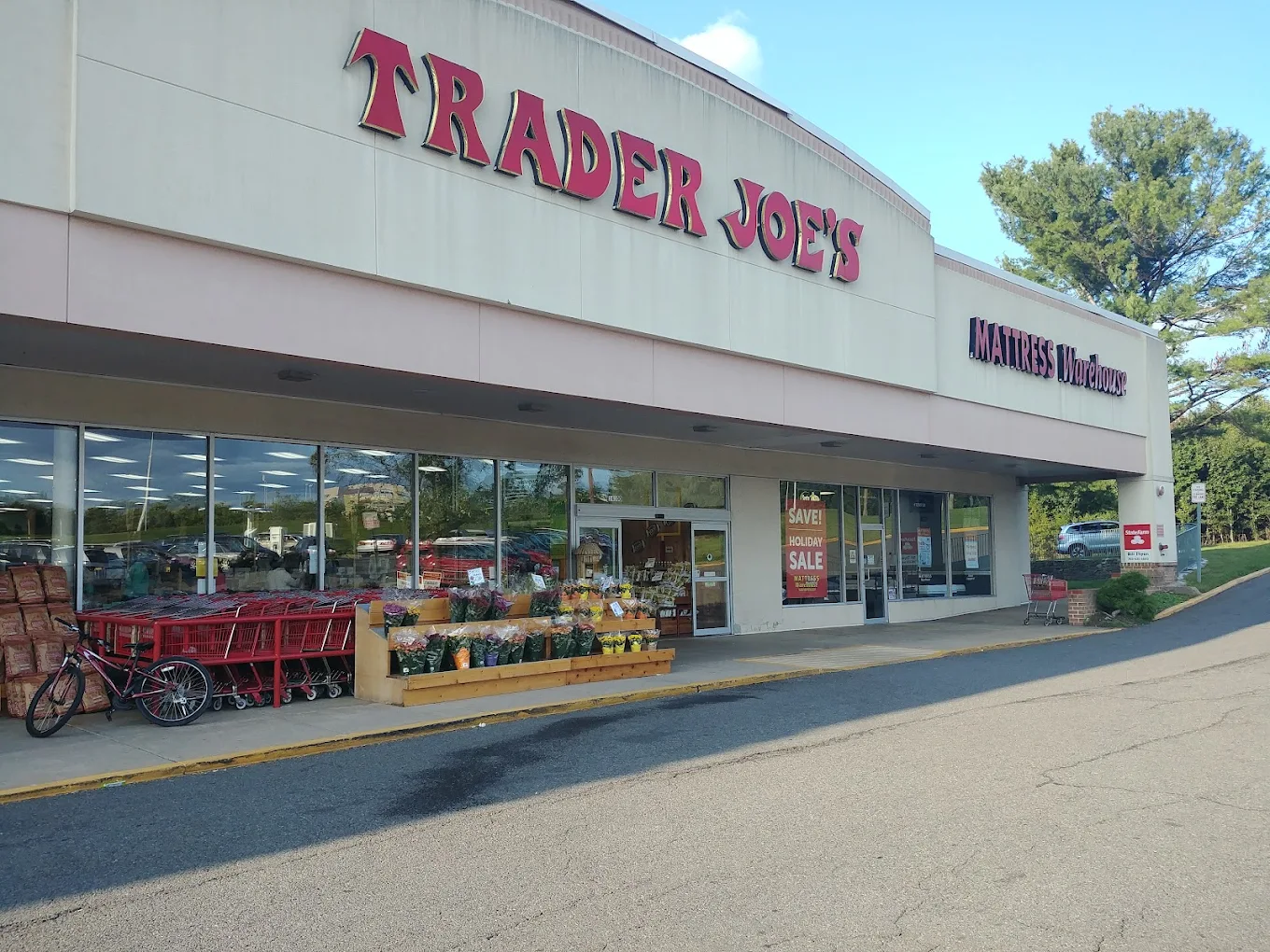
Caption: Exterior of a Trader Joe’s store, symbolizing curated grocery curation. Source: Ukubona Consumer Archive.
A salty, crumbly Mexican cheese, the Cotija Wedge ($3.99) is high in fat and protein, with a 4 oz wedge yielding ~440 calories. The Pâté Chicken & Black Truffle ($5.99) is luxurious and calorie-dense, with a 5 oz package providing ~650 calories, suited as a garnish rather than a staple. Sliced Prosciutto di Parma ($6.79), a thin-sliced cured pork, offers ~210 calories for a 3 oz pack, also a garnish. A dozen Extra Large Cage-Free Eggs ($3.29) provide 960 calories (~80 calories each), a foundational item for breakfast or baking. The Gala Apple Bag (2 lb, $2.99) includes ~6 medium apples, each ~100 calories, totaling ~600 calories with fiber. Red/Green Grapes (2 lb, $3.99) yield ~600 calories, sugar-heavy and snackable. A Jumbo Red Onion ($1.19) offers ~60 calories, high in flavor but low in caloric impact. Heavenly Tomatoes ($2.99), likely grape tomatoes, provide ~125 calories (~25 tomatoes at 5 calories each). The Complete Caesar Salad Kit ($3.29) yields ~400 calories, including dressing and croutons. An Organic English Cucumber ($1.99) contributes negligible calories (~45), high in hydration. Finally, the Organic Baguette ($3.99) delivers ~1,000 calories, the primary carbohydrate source. Summing these, the haul provides ~6,090 calories.[2]
The ritual grammar of a chacuterie board: cutting, placing, spacing, arranging, etc. Source: Ukubona Consumer Archive.
Cost Efficiency Analysis
At $43.32 for ~6,000 calories, this haul yields a cost of ~0.72 cents per calorie, which is expensive compared to calorie-dense staples like rice or legumes but typical for high-quality, perishable whole foods. The presence of premium items (truffle pâté, prosciutto, organic bread) inflates the average. If viewed through a gourmet lens rather than subsistence, the cost per experience (e.g., cheese board + salad + fruit) is quite reasonable. This reflects a trade-off between nutritional density and sensory richness, aligning with the preferences of middle-aged consumers prioritizing quality over quantity.[3]
Dietary Structure and Macro Balance
This cart leans heavily toward garnish-grade proteins (pâté, prosciutto), quick sugars (grapes, apples), and accent vegetables (cucumber, tomatoes, red onion), with only eggs and baguette offering a substantive meal core. From a macro standpoint: Protein is low-moderate (~60–80g total), carbohydrates are high (~600–700g total), and fats are moderate (~150g, mostly from cheese, pâté, Caesar dressing). No legumes, nuts, whole grains, or dark leafy greens are present. This is a Mediterranean-meets-snackboard haul, not a foundation for long-term satiety or metabolic balance.[4]
| Macronutrient | Estimated Quantity | Primary Sources |
|---|---|---|
| Protein | 60–80g | Eggs, Cotija, Pâté, Prosciutto |
| Carbohydrates | 600–700g | Baguette, Grapes, Apples |
| Fats | 150g | Cotija, Pâté, Caesar Dressing |
Culinary Utility
From a culinary standpoint, the haul is rich in pairing opportunities. One could build a charcuterie board (cotija, pâté, prosciutto, baguette, grape tomatoes, onion), assemble a quick breakfast (eggs, toast, fruit), or toss together a semi-luxurious lunch (Caesar kit, sliced cucumber, apples on the side). However, there’s a gaping absence of oils, root vegetables, grains, or legumes. There is also no dessert, no coffee, no pantry base—this is a culinary flourish run, not a pantry-filling expedition.[5]
Charcuterie board assembly, styled as a GIF alternative. Source: Ukubona Culinary Archive.
Longevity Forecast
For two adults aged 45–55, assuming moderate activity and a baseline intake of 1,800–2,200 calories per day, this haul might last 1.5 to 2 days if it were the sole food source. Realistically, as a supplement to pantry staples (oils, pasta, rice), it might stretch to 3–4 days. This grocery bag will not carry a household into the week. It is two to three days of elevated snacking and light meals for a pair of adults who are likely supplementing with existing pantry stocks. The perishables (pâté, cucumbers, Caesar salad) demand quick consumption. The only item with significant shelf life is the onion. For a household aiming at 3–4 days of sustained nourishment, at least two proteins (e.g., tofu, beans), one starchy vegetable (e.g., potatoes), and a grain (e.g., rice, oats) would need to be added.[6]
SWOT Analysis
The haul’s strategic profile is assessed through a SWOT analysis, highlighting its strengths, weaknesses, opportunities, and threats.
| Category | Description |
|---|---|
| Strengths | The cart demonstrates culinary intentionality and flavor variety. It appeals to middle-aged adults with refined palates. The inclusion of fermented meats and cheese, fresh produce, and pre-built salad kits suggests time-conscious, health-aware consumers. |
| Weaknesses | The absence of caloric anchors (beans, pasta, rice), fiber-rich vegetables (broccoli, kale), or shelf-stable proteins is notable. The cost-per-calorie ratio is high. There's a risk of food waste if perishable items aren’t used within 48 hours. |
| Opportunities | With the right pantry pairings, this cart could transform into several complete meals. One could roast the tomatoes and onion, add grains, and stretch the eggs across three meals. This is a grocery list optimized for improvisation, not prescription. |
| Threats | If used as a stand-alone food source, the cart fails nutritionally beyond the short term. Sodium content may be high due to cured meats and cheese. And there is no emergency buffer: once these perishables are gone, there’s nothing shelf-stable to fall back on. |

Caption: Diagram of strategic grocery planning, emphasizing SWOT considerations. Source: Ukubona Economic Archive.
Conclusion
This receipt documents a symbolic grocery run: a well-curated, self-aware cart built more for rhythm, flavor, and ritual than sustainability. It belongs to a middle-aged sibling pair who understand that a single shopping trip can serve as a dialogue with the week—not a definitive statement, but a gesture. In this sense, the haul is both decadent and fragile, like a string quartet rehearsing in a collapsing amphitheater. The existential lesson? Perishables perish. If you want to eat with the gods, you’d better eat tonight.[7]
“Perishables perish. If you want to eat with the gods, you’d better eat tonight.”
See Also
Acknowledgments
- Muzaale, Abimereki. Ukubona: Neural Fractals of Being. Ukubona Press, 2024. [↩︎]
- USDA. FoodData Central. United States Department of Agriculture, 2025. [↩︎]
- Pollan, Michael. The Omnivore’s Dilemma. Penguin, 2006. [↩︎]
- Katz, Sandor. The Art of Fermentation. Chelsea Green Publishing, 2012. [↩︎]
- Bittman, Mark. How to Cook Everything. Wiley, 2008. [↩︎]
- Nestle, Marion. Food Politics. University of California Press, 2013. [↩︎]
- Berry, Wendell. The Unsettling of America. Sierra Club Books, 1977. [↩︎]